
Can bilirubin or saturation be measured at home?
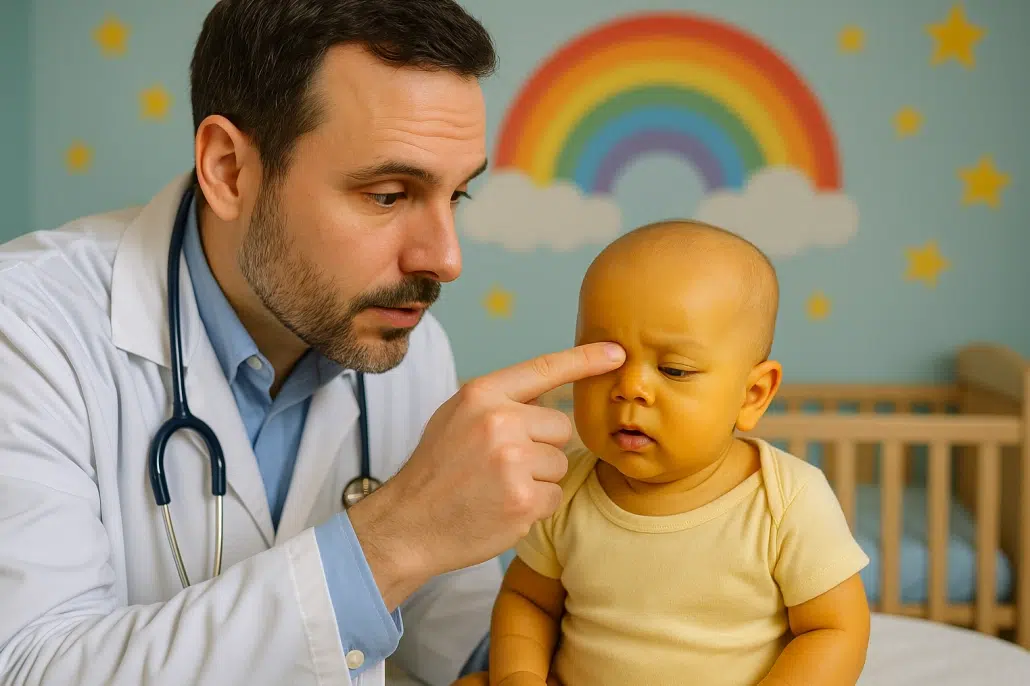
Neonatal jaundice is a common condition in newborns, recognized by a yellowish tone in the skin and the whites of the eyes. This yellow color is caused by an excess of bilirubin in the blood — a natural substance produced when old red blood cells break down.
In newborns, especially during the first days of life, the liver is still maturing and may not process bilirubin efficiently, leading to its buildup.
Most cases of newborn jaundice are mild and physiological, resolving on their own as the baby’s liver matures. However, it is crucial to monitor bilirubin levels carefully. Very high levels of bilirubin can be toxic to the nervous system and, if untreated, may cause kernicterus, a rare but serious form of brain damage.
What Causes Jaundice in Newborns?
Several factors may contribute to jaundice:
Prematurity: Premature babies are at higher risk because their liver is less developed and processes bilirubin more slowly.
Feeding difficulties: Poor feeding, whether due to latching problems, low milk production, or infrequent feeds, can reduce the baby’s ability to eliminate bilirubin through stool.
Blood type incompatibility: When the mother’s and baby’s blood types differ, maternal antibodies may destroy the baby’s red blood cells, increasing bilirubin production.
Liver or bile duct issues: Rarely, underlying conditions such as infections, enzyme deficiencies, or bile duct abnormalities can impair bilirubin clearance.
Cephalohematoma: A large bruise on the baby’s head after birth can release additional red blood cells, leading to higher bilirubin levels.
How Jaundice Is Diagnosed and Treated
Diagnosis typically starts with a clinical examination, and if necessary, bilirubin testing. Treatment depends on the cause and severity:
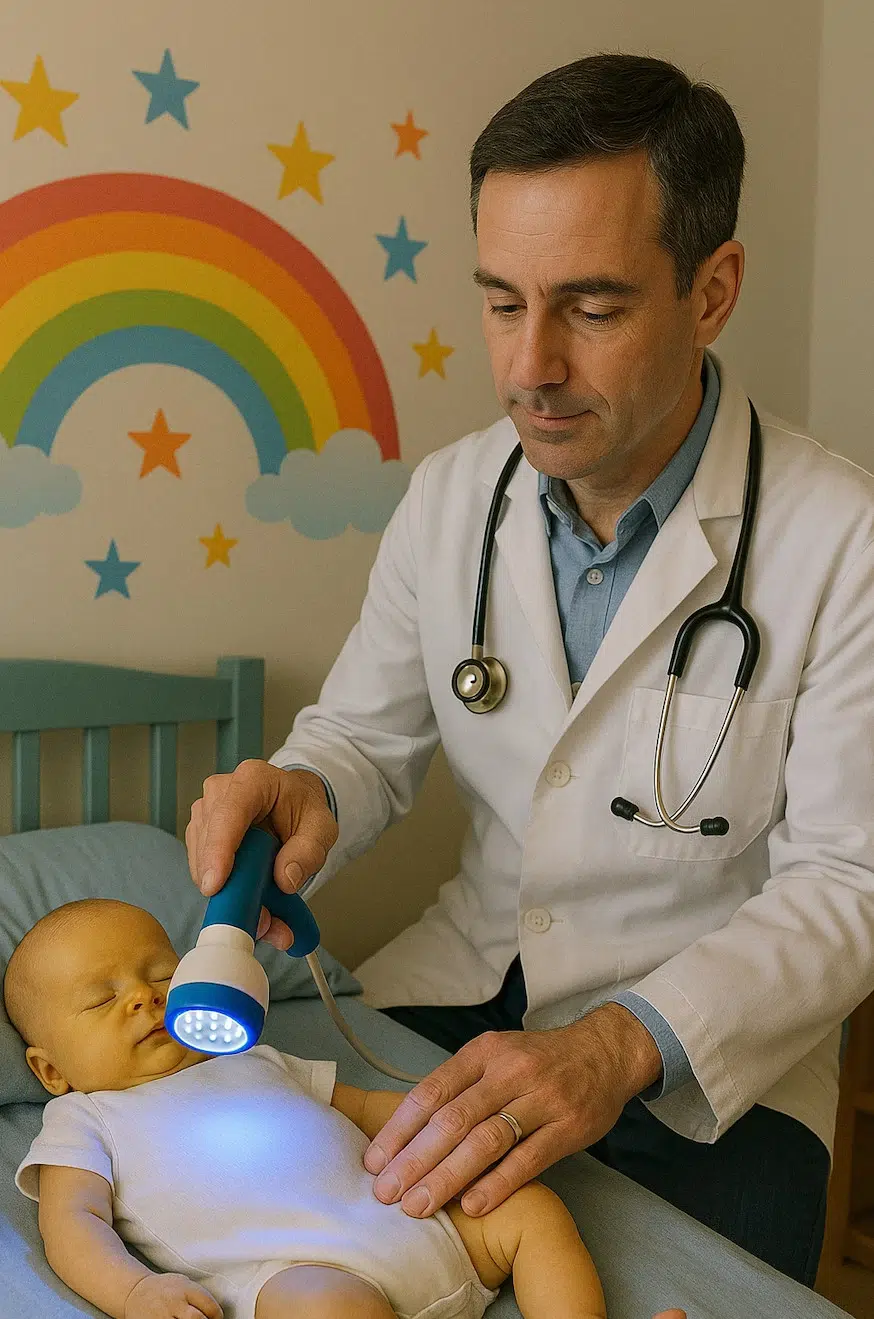
Phototherapy: The most common and effective treatment. The baby is placed under a special blue light that transforms bilirubin into a form that can be eliminated through urine and stool.
Ensuring adequate feeding: Frequent and effective feeding (breast or formula) helps the baby pass stool more often, reducing bilirubin levels.
Exchange transfusion: In very rare, severe cases where phototherapy isn’t sufficient, a small amount of the baby’s blood is replaced with donor blood to quickly reduce bilirubin levels.
Visible Signs of Jaundice You Can Check at Home
Parents can often spot the early signs of jaundice by observing the following:
Yellow skin tone: Usually starts on the face and spreads downward to the body. Best seen in natural light. In darker-skinned babies, check the whites of the eyes and gums.
Gentle pressure test: Gently press your baby’s skin (on the forehead, nose, or chest). If the area appears yellow when you release, jaundice is likely. If not, the skin returns to its normal color immediately.
Yellowing of eyes, gums, or nails: Yellow sclera (the whites of the eyes) is a reliable indicator. Gums or nails may also appear slightly yellow.
Other warning signs: Excessive sleepiness, difficulty waking, poor feeding, fewer wet diapers, pale stools (acholia), or dark yellow urine. These symptoms, together with yellowing skin, require prompt medical attention.
When to Seek Medical Help
If you notice any of the above signs, or if jaundice seems to be spreading or deepening, or if your baby becomes lethargic, feeds poorly, or has abnormal stools or urine, contact your pediatrician immediately. Although most cases are harmless, professional assessment is essential to rule out serious causes and ensure your baby’s safety.
If you have concerns, you can request a home visit from our pediatric service. A pediatrician will perform a detailed visual assessment of your undressed baby under good natural light, examining the skin, mucous membranes, and eyes to evaluate the presence and severity of jaundice.
If jaundice is suspected, precise measurements may be performed:
Total Serum Bilirubin (TSB):
The most reliable method, measured from a small blood sample (usually from the heel), to quantify circulating bilirubin and guide treatment decisions.Transcutaneous Bilirubin Measurement:
Many hospitals use a non-invasive transcutaneous bilirubin meter, which estimates bilirubin levels through the skin (typically on the forehead or chest). It emits light and measures absorption. This screening helps reduce the need for blood draws, especially for mild to moderate jaundice, but results should be interpreted carefully.
If the reading is above a risk threshold, it is confirmed with a TSB test.
If your baby’s bilirubin level exceeds a certain limit, phototherapy may be prescribed. This treatment uses special blue light to convert unconjugated bilirubin into water-soluble photoisomers that the body can excrete easily.
During treatment, your baby’s eyes are protected, and hydration and temperature are closely monitored to prevent complications.

